The Chapel Inside the Palazzo Doria Pamphilj
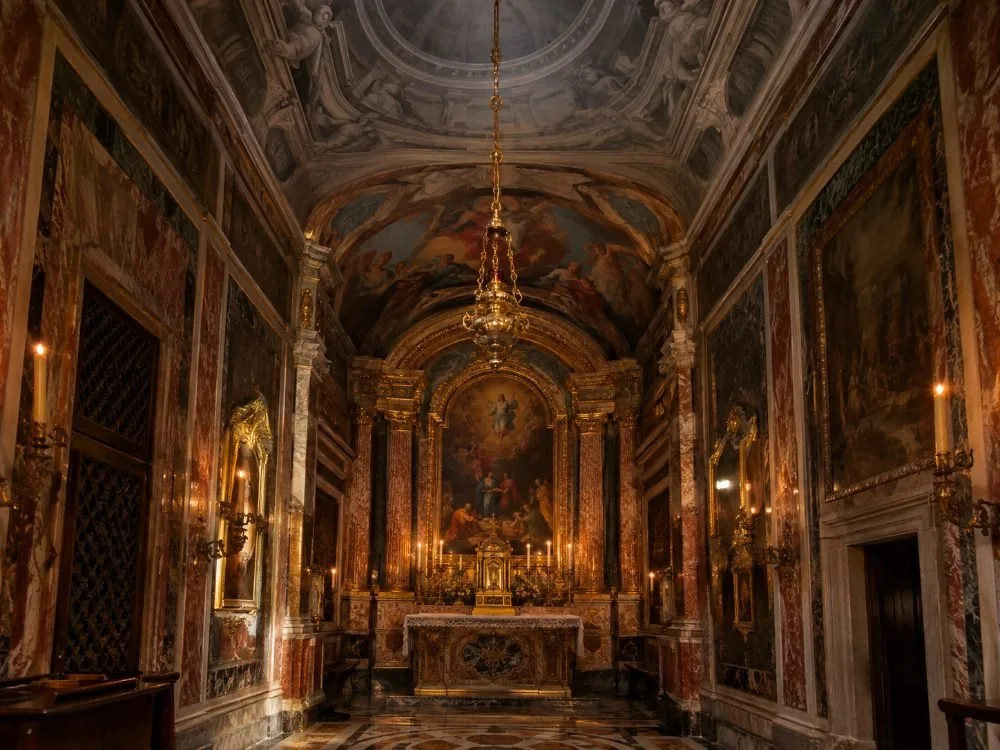
A dome that is not there
The antechapel ceiling is painted in monochrome with a false perspective that pretends to be a dome. Rome has form in this: two minutes away at Sant’Ignazio there is a 17-metre false dome painted on flat canvas over the crossing, standing in for one that was never built. Seeing the small private version and the enormous public version within a quarter of an hour of each other is one of the better accidental exercises this neighbourhood offers. The rest of the cluster.
Bernini’s lamp, and the bodies
The gilt bronze hanging lamp was designed by Gian Lorenzo Bernini, who also made the marble bust of Innocent X standing beside the Velázquez a few rooms away — so the same hand is present twice in this building, once in marble and once in metal. The bust and the portrait.
Then the relics, which visitors either love or hurry past. The chapel holds the remains of Saint Theodora, described by the gallery as perfectly preserved and reported to have been spared from fire, and relics of a martyr known as the Centurion, identified as one of the Roman guards present at the crucifixion. An ivory crucifix by Ercole Ferrata is also recorded here. A private family chapel with its own saint is not a museum exhibit; it is what a Roman princely household of the 1690s considered a normal amenity.
Go in quietly and give your eyes a moment before you look up. The antechapel is small and dim, and the false perspective only does its work once your eyes have adjusted — walk in and immediately raise your head and you will see a flat ceiling and wonder what the fuss was.
Where it sits in the visit
Inside the palace, on the route, and easily missed if you are moving briskly through four wings of pictures with a commentary talking in your ear. Ninety minutes is the gallery’s own estimate for the whole thing, and the chapel is one of the places people skip when they are trying to hit that number — how long to allow. Allow it five minutes. Fontana, Minardi, Bernini and a saint, in a room most visitors give ninety seconds to.
The chapel comes with the gallery ticket
Reserved entry to the palace and its four wings, 4.7 from 1,910 reviews, with the included audio guide collected at the desk. Nothing extra is needed to see the chapel — only the willingness to slow down for it.
Frequently asked questions
Who designed the chapel at Palazzo Doria Pamphilj?
Carlo Fontana, between 1689 and 1691. The vault painting of the Coronation of the Virgin is by Tommaso Minardi and dates from the middle of the nineteenth century.
Is there really a body in the chapel?
The chapel holds the remains of Saint Theodora, which the gallery describes as perfectly preserved and reportedly spared from fire, along with relics of a martyr known as the Centurion, identified as one of the Roman guards present at the crucifixion.
Is the chapel included in the gallery ticket?
Yes. It is inside the palace and on the visit, and no separate booking is involved — unlike the Secret Apartments, which are run by a separate body: the Secret Apartments.
What is the Bernini connection?
The gilt bronze hanging lamp in the chapel was designed by Bernini, whose marble bust of Innocent X hangs a few rooms away beside the Velázquez portrait of the same pope — the route through the wings.