Visiting the Doria Pamphilj with Children
What works
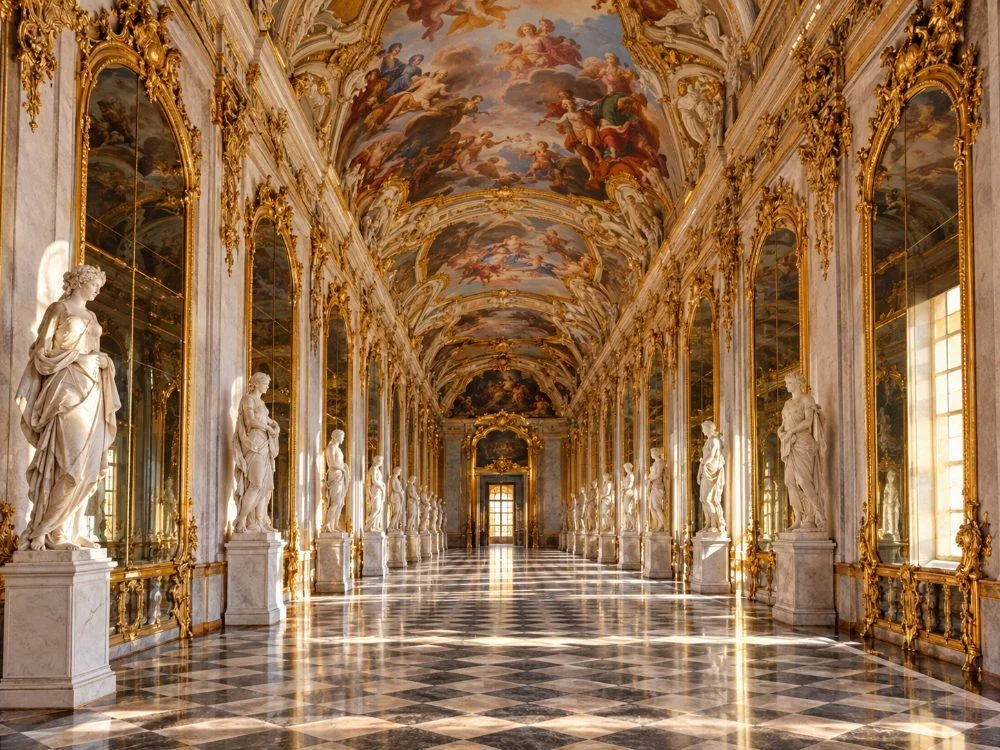
- The Hall of Mirrors: gold frames, statues and a ceiling of Hercules doing twelve things
- Bruegel’s little sea battle in the Bay of Naples, crowded with ships
- No time limit, so you can leave the moment it stops working
- A café in the courtyard to regroup in
- Sant’Ignazio two minutes away, free, with a painted dome that is not there
Worth knowing
- No lift — a pushchair means carrying it up
- No cloakroom, and rucksacks are barred at the door
- No food or drink inside the gallery, at all
- Very little to read, so everything depends on you or the commentary
- Quiet rooms where running is going to be noticed
Three things to send them looking for
The sea battle. Pieter Bruegel the Elder’s A Battle in the Bay of Naples is small, 42.2 by 71.2 centimetres, painted on a panel, and absolutely full of ships. Count the ones on fire. It is the best thing in the building for a child and almost nobody points them at it.
The mirrors. The Hall of Mirrors was designed in 1731, with gold-framed Venetian mirrors alternating with classical statues under a ceiling fresco of the Labours of Hercules painted between 1731 and 1734. Twelve labours, one ceiling, and a genuinely good game of work-out-which-one-that-is.
The angriest man in Rome. Velázquez’s Pope Innocent X, with Bernini’s marble bust of the same face beside it since 1927. Ask a child which one looks more like a real person. They give better answers than adults do. The picture, explained.
Give each child the job of finding one animal per wing. Between the Brueghel paradise on copper, the ram in the Caravaggio Baptist and the horses and dogs scattered through the landscapes, they will not run out, and it keeps eyes on the walls rather than on the floor.
The practical side
No lift means a staircase to the gallery floor, so a folding pushchair is easier than a large one. No cloakroom means the bag you bring is the bag you carry, and rucksacks are barred outright, which for a family is the rule that hurts most (what to do instead). Food and drink are not permitted inside the gallery, but there is a café in the courtyard, so the snack happens downstairs before or after — not in the Poussin Room, which I have seen attempted.
The reward afterwards
Walk two minutes to Sant’Ignazio di Loyola on Via del Caravita. It is free, it is open most of the day, and over the crossing there is a 17-metre dome painted on flat canvas, standing in for a dome that was never built. Stand on the marked yellow marble disc in the floor and it looks real; walk forward a few steps and it visibly flattens out. Children who were bored by pictures fifteen minutes ago will do that walk six times. The rest of the cluster.
Book a slot early in the day
Reserved entry in a named 30-minute window, 4.7 from 1,910 reviews. With children I would take the first slot of the day, before the rooms fill and while the desk still has commentary units to hand out.
Frequently asked questions
Is the Galleria Doria Pamphilj good for kids?
For the right child, yes, and kept short. There is nothing interactive and very little to read, so it depends on you, the included audio guide, and picking three things to hunt for. An hour is plenty — how long to allow.
Can I take a pushchair in?
There is no lift to the gallery floor, so you will be carrying it up the stairs. A folding pushchair is far easier than a large one. Note also that rucksacks are not allowed inside at all and there is no cloakroom.
Can children eat or drink inside?
Not in the gallery — food and drink are not permitted. There is a café in the palace courtyard for before and after, and public drinking fountains all over this part of Rome: where to eat and fill a bottle.
What is the best thing to show a child here?
Bruegel the Elder’s A Battle in the Bay of Naples — small, packed with ships, and easy to turn into a counting game. After that, the Hall of Mirrors ceiling with its twelve labours of Hercules.