What to See at the Galleria Doria Pamphilj
The five things I would not let you walk past
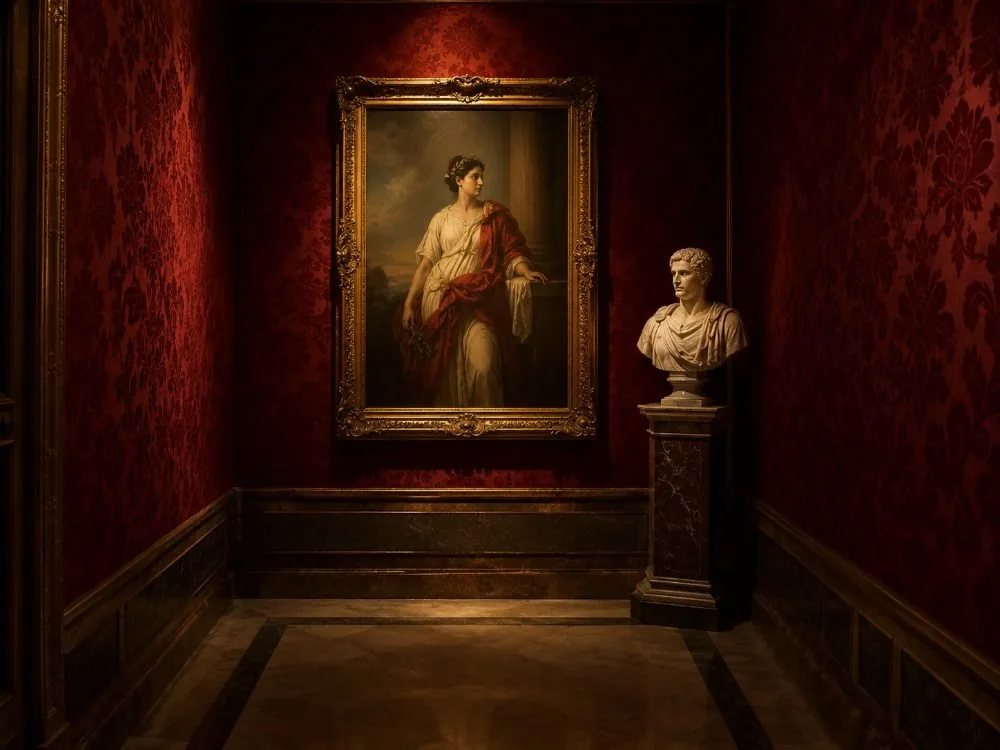
1. Velázquez, Portrait of Pope Innocent X
Painted probably in the summer of 1650, oil on canvas, 141 × 119 cm, and given a cabinet of its own. Since 1927 it has hung with Bernini’s white Carrara marble bust of the same pope, so you get the man twice, in two mediums, by two of the best who ever worked. Taine called it the masterpiece amongst all portraits. More on the portrait, including the “troppo vero” story and why it should be told as a story.
2. The three Caravaggios
Most lists say two. There are three: the Penitent Mary Magdalene, from the early 1590s; the Rest on the Flight into Egypt of around 1597, with the violin-playing angel turning his back on you; and Saint John the Baptist, the youth with a ram, whose composition dates from 1601 or 1602 and which scholars accept as Caravaggio’s own hand. All three, and why the count is wrong everywhere.
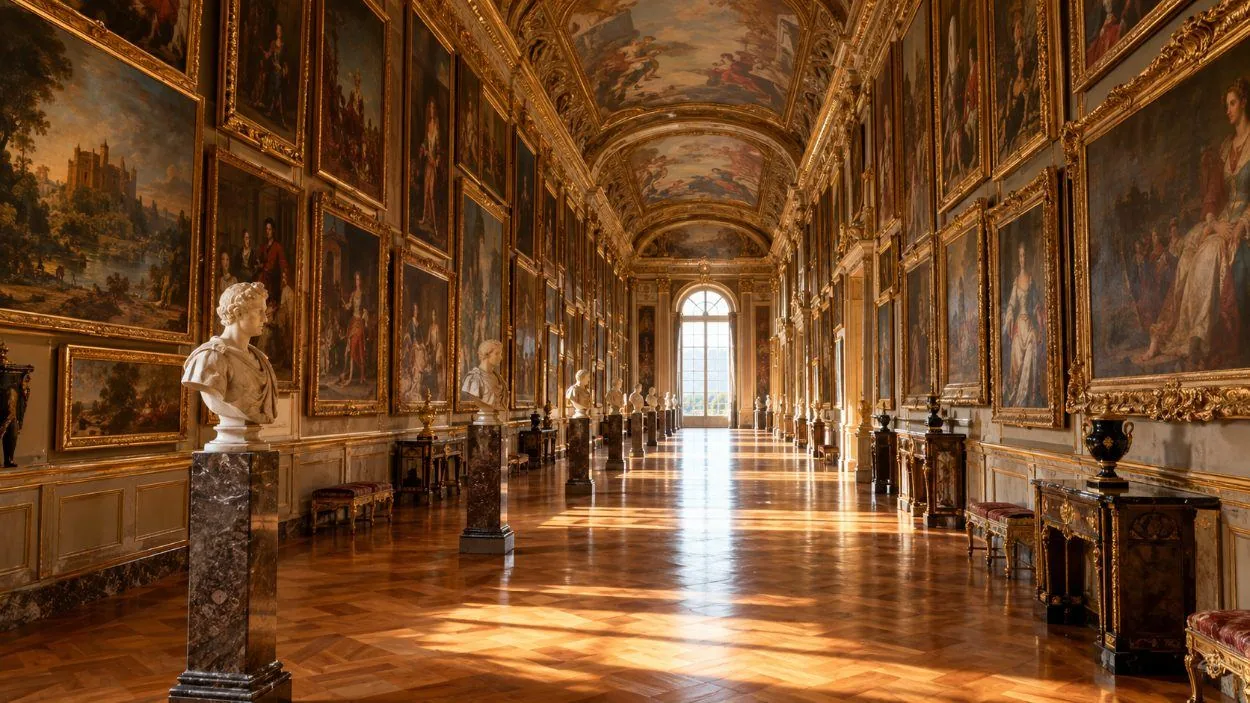
3. The Hall of Mirrors
The second wing, designed in 1731: gold-framed Venetian mirrors alternating with classical statuary, under Aureliano Milani’s ceiling fresco of the Labours of Hercules, painted between 1731 and 1734. The Hercules subject is a nod to the mythological ancestry the family claimed. It is the one room where everybody stops talking and looks up.
4. The Green Room
Three panels worth crossing the city for: Hans Memling’s Lamentation over the Dead Christ with a Donor of about 1470, Filippo Lippi’s Annunciation of about 1445–1450, and Francesco Pesellino’s Miracle of Saint Silvester of 1450–53. Prince Jonathan has singled out the Lippi in interview as unusually Anglo-Saxon in taste for an Italian collection, which tells you something about the people who bought it.
5. Bruegel’s battle in the bay
Pieter Bruegel the Elder, A Battle in the Bay of Naples, oil on panel, 42.2 × 71.2 cm, also catalogued as a naval battle in the Gulf of Naples and dated 1558–1562. It is small, it is crowded with ships, and it is the single best thing in the building to put a child in front of. Jan Brueghel the Elder’s Earthly Paradise with Original Sin, painted on copper, is in the collection too.
And if you have longer
Raphael’s Double Portrait of Andrea Navagero and Agostino Beazzano, about 1516. Titian’s Salome with the Head of John the Baptist. Correggio’s Allegory of Virtue of 1525, unfinished, once in Isabella d’Este’s collection at Mantua and said to have given Bernini the idea for his Truth Unveiled by Time. Lorenzo Lotto’s Self-portrait. Guercino’s Erminia discovers the wounded Tancred. Claude Lorrain’s landscape with the marriage of Isaac and Rebecca. Two Annibale Carracci. Parmigianino’s tiny Nativity. Algardi’s marble of Olimpia Maidalchini, who ran more of the papacy than anyone was comfortable admitting.
Then the extremes: Giovanni di Paolo’s Birth of the Virgin at 20.6 × 33.5 cm is the smallest thing on the official masterpiece list, and Vasari’s Deposition from the Cross at 297 × 188 cm the largest. In the Poussin Room the landscapes climb the wall almost to the ceiling, with canvases by Guillaume Courtois up at the top where you can barely see them; in the Rooms on the Corso, Jan van Kessel the Elder’s still lifes on copper reward standing closer than feels polite. Three busts of 1850 by Pietro Tenerani have their own cabinet.
The Aldobrandini Hall, opened in 1838 and the last big addition to the palace, is where people tire and start walking faster. Slow down instead. The sixteenth-century Brussels tapestries of the Battle of Lepanto are in the collection and they repay a minute of attention that most visitors have already spent.
Why nothing tells you what it is
Because the arrangement is not curatorial. The gallery states that the paintings are arranged according to the late-eighteenth-century arrangement described in a manuscript of the Doria Pamphilj Historical Archives dated 1767, which means symmetry first and chronology nowhere. A hang like that carries little or no conventional labelling, and the commentary is how the gallery tells you what you are looking at. Collect one at the desk. Why the pictures are stacked like that.
Reserve a slot and walk it properly
The plain entry ticket, 4.7 from 1,910 reviews, holds you a 30-minute entry window and leaves the length of the visit to you. The prince’s commentary is included with it while the desk still has units.
Frequently asked questions
What is the most famous painting at the Doria Pamphilj?
Velázquez’s Portrait of Pope Innocent X, painted around 1650 and given its own cabinet, shown since 1927 beside Bernini’s marble bust of the same pope. The full story of the picture.
How many Caravaggios are at the Doria Pamphilj?
Three, though most guides print two. The Penitent Mary Magdalene, the Rest on the Flight into Egypt and Saint John the Baptist, the youth with a ram. Here is each one.
Are the rooms labelled?
The historic hang carries little or no conventional museum labelling, and identification is done through the included audio guide, which is the gallery’s primary interpretation tool. Collect one at the desk on the way in — what it is and who recorded it.
Can I see the family apartments?
The Private Apartments on the piano nobile are reported to have opened to visitors on 1 August 2023, and the Secret Apartments — four themed rooms and the Bath of Diana — are a separate visit run by a separate body with its own hours. Neither is on the standard gallery route.