The Doria Pamphilj, Explained
I grew up on Via della Gatta, the street along the back of this palace, and later spent seven years on the ticket desk and the audio-guide counter of a private gallery on Via del Corso. The useful thing to know about the Galleria Doria Pamphilj is that it is a house rather than a museum. Almost everything else follows from that.
A private house that lets you in
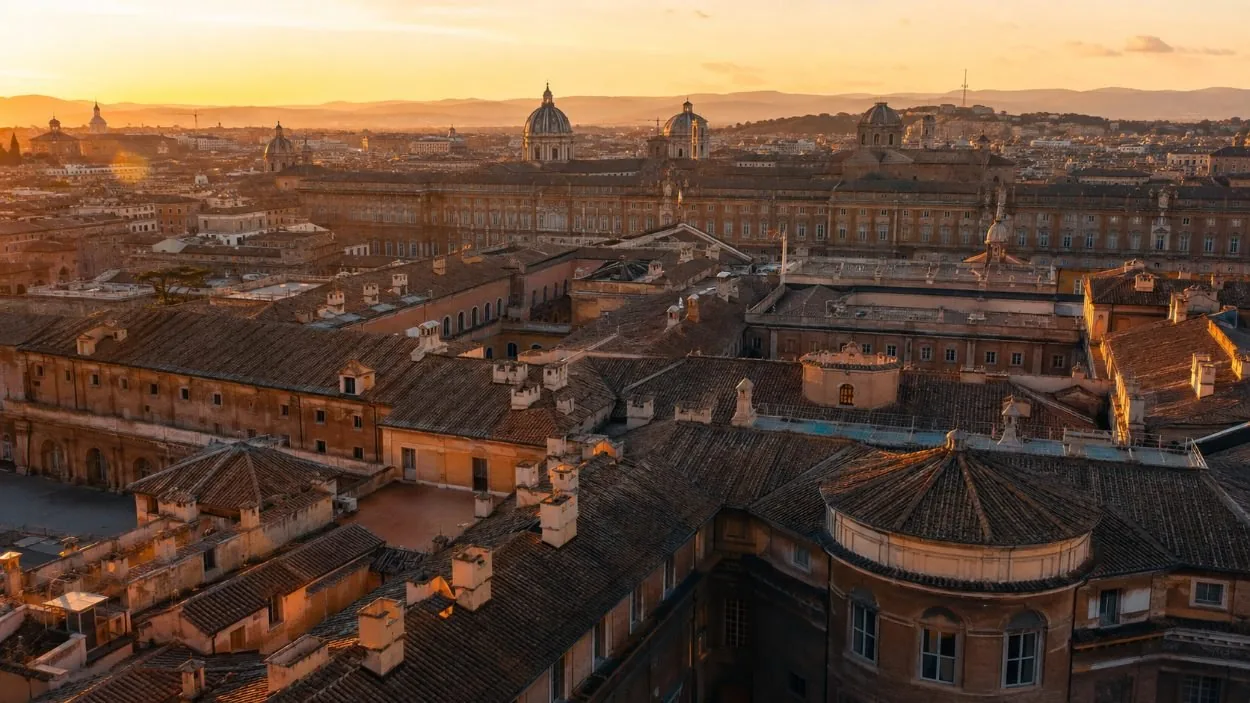
The collection belongs to the princely Roman family Doria Pamphilj, and since 2013 the assets have been held by the Doria Pamphilj Trust, set up to keep the family’s artistic heritage whole. It is neither a state nor a municipal museum, so the schemes you have read about do not reach it. The palazzo is likely the largest in Rome still in private ownership, and the official site says the Private Apartments on the piano nobile are still inhabited by the family. Prince Jonathan has put it plainly: “The inheritance I most enjoy is the Palazzo Doria Pamphilj, where I live in Rome, and the art collections.” What that changes for a visitor.
Why it looks like that
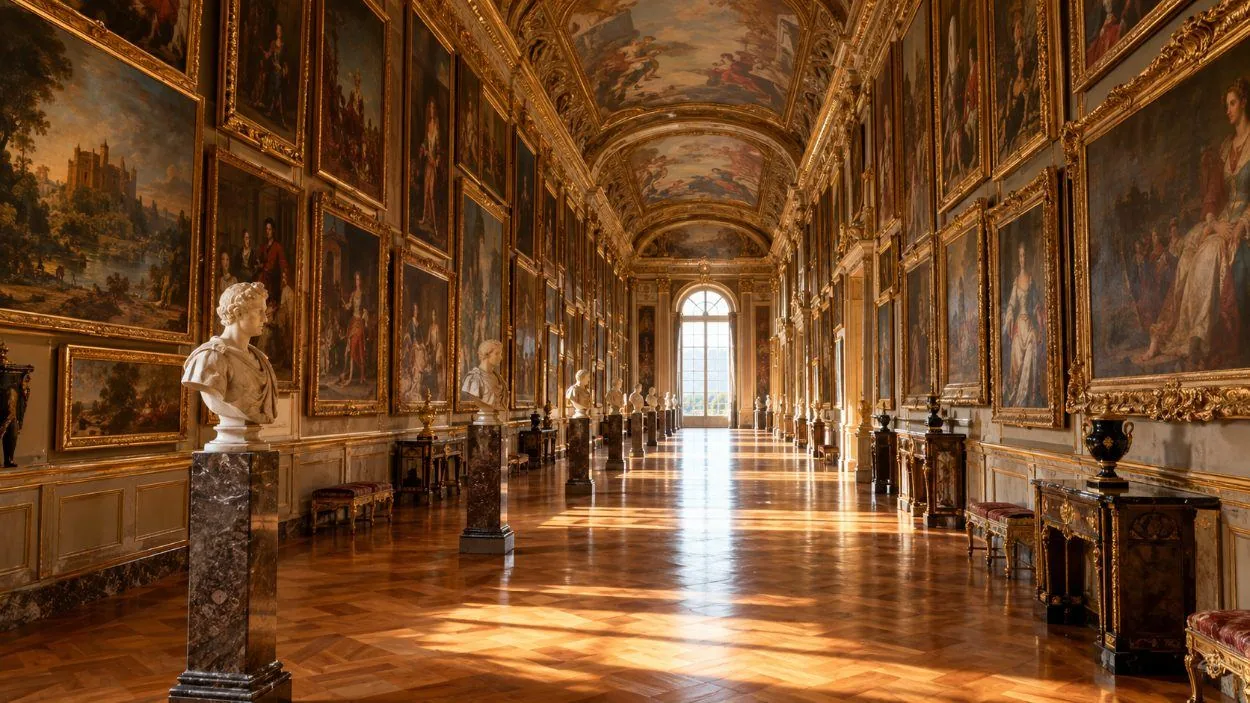
The pictures are stacked frame to frame, several rows high, in corridors rather than in galleries. That is deliberate. The gallery’s own wording is that the paintings are arranged according to the late eighteenth-century arrangement, as described in a manuscript of the Doria Pamphilj Historical Archives dated 1767. Francesco Nicoletti designed it; the four wings had gone up between 1731 and 1734 under Gabriele Valvassori, who also rebuilt the Via del Corso façade in Rococo in 1734. Works are grouped for symmetry and style rather than by school or date, which is what a modern rehang would destroy.
So little or nothing on the wall walks you through it. No source I trust states flatly that there are no labels, so I will not either; what I can tell you is what the hang is and what the gallery uses in place of a label rail. The 1767 arrangement, in full.
The audio guide does the labelling, and the owner recorded it
This is the keystone. The official wording is that audio guides in Italian, English, French and Spanish are included in the admission ticket, subject to availability, and you collect one at the entrance. The Italian says fino ad esaurimento, while supplies last: turn up late in the day and there may be none. Four languages, and German is not among them, whatever a third-party page claims.
The voice is Prince Jonathan Doria Pamphilj’s. Frommer’s calls it colorfully narrated by the prince himself, who recalls roller-skating in the palazzo as a child, and he has confirmed writing it: “We have a lot of positive comments, particularly about the audio-guide I made.” It wanders, the way a person showing you round their own house wanders. How long it runs, nobody publishes; whether you get a device or an app, the listings and the gallery disagree. This is why I am blunt about the catalogue, where several listings sell entry “with audio guide” in the headline for a commentary the desk gives you anyway. What each listing really adds.
Four things to be sure you look at
The Velázquez. The Portrait of Pope Innocent X, 141 by 119 centimetres, painted probably in the summer of 1650, in a cabinet of its own with Bernini’s white Carrara marble bust of the same pope beside it since 1927. Taine called it the masterpiece amongst all portraits. The picture and the room.
The third Caravaggio. Most guides count two. There are three: the Penitent Mary Magdalene from the early 1590s, the Rest on the Flight into Egypt of around 1597, and the Saint John the Baptist, the Youth with a Ram, composed in 1601 or 1602. Why the third falls off the lists.
The Hall of Mirrors. The second wing, designed in 1731: gold-framed Venetian mirrors alternating with classical statuary under Aureliano Milani’s ceiling fresco of the Labours of Hercules, 1731 to 1734, a subject that nods at the family’s claimed mythological ancestry.
The Green Room. Memling’s Lamentation over the Dead Christ with a Donor of about 1470, and Filippo Lippi’s Annunciation of about 1445 to 1450, which Prince Jonathan has singled out as unusually Anglo-Saxon in taste for an Italian collection. The rest of the route.
Three traps, and none of them is the ticket
Wednesday. Rome shuts its museums on Monday. This one opens on Monday and closes every Wednesday, plus 1 January, Easter Sunday and 25 December. A widely repeated line says it shuts only on the third Wednesday of the month. It does not. The closing days.
Your rucksack. There is no cloakroom, and the official wording is that it is strictly forbidden to enter the gallery premises with large pieces of luggage, bags or rucksacks. Small bags only; animals, food, drink and umbrellas are barred too. Bag storage exists nearby. What to do instead.
The stairs. The gallery is on the first floor and there is no lift; the official page says so in both languages. Beyond that I cannot confirm anything — wheelchair availability, accessible toilets, a step-free route. Phone the gallery on +39 06 6797323 before you travel. What is published, and what is not.
What I would do
Allow about 90 minutes, the gallery’s own figure; one reviewer stayed nearly four hours and nobody moved him along. Come on a weekday morning, early enough that the audio-guide supply is still healthy. Reserve a slot between April and October or on a weekend morning, and otherwise do not lose sleep over it, because the desk sells at the door and reviewers keep using the word uncrowded. What else is close.
Ready to go?
Start with what the audio guide actually is, because it changes how you plan the visit. Then read how entry works, check the opening hours for the Wednesday, and if you are weighing the listings against each other, the audit of all six is the page I would send a friend to.
Frequently asked questions
Is the audio guide really included at the Galleria Doria Pamphilj?
Yes. The gallery’s own wording is that audio guides in Italian, English, French and Spanish are included in the admission ticket, subject to availability — so it is included, but it is not guaranteed to still be there late in the day. The whole story, including whose voice is on it, is on the audio guide page.
Which day is the Galleria Doria Pamphilj closed?
Wednesday, every week, plus 1 January, Easter Sunday and 25 December. Rome trains you to expect a Monday closure and this is the place that punishes you for it. See which day it is closed and the full opening hours.
How long does a visit take?
The gallery itself suggests about ninety minutes following the audio guide, and there is no enforced time limit — one reviewer spent nearly four hours and still felt he had missed things. How long you need goes through what changes the number.
Do I need to book ahead?
Less than you would for the Galleria Borghese, which sells no tickets at the door at all. This gallery does sell at its own ticket office, though it runs entry in thirty-minute slots and says access cannot be guaranteed without a reservation. Do you need to book has the honest answer by season.